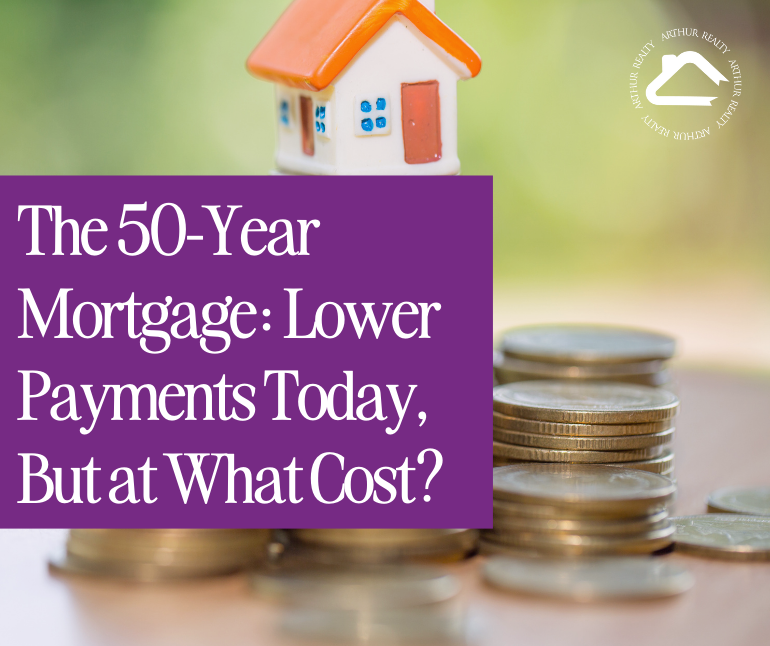
The 50-Year Mortgage: Lower Payments Today, But at What Cost?
The 50-Year Mortgage: Lower Payments Today, But at What Cost?
Imagine paying on a house for 50 years.
Instead of the traditional 360 payments on a 30-year mortgage, a 50-year mortgage stretches repayment to 600 payments. On the surface, that sounds helpful—lower monthly payments and better chances of qualifying.
But the real question is: what does it cost long term?
Let’s break it down.
What Is a 50-Year Mortgage?
A 50-year mortgage extends repayment well beyond the standard 30-year term. By spreading payments over more years, the monthly payment drops, which can make it easier for buyers—especially in North and South Carolina—to meet today’s affordability challenges.

The Good
Lower Monthly Payments
A longer loan term means a lower monthly payment.
Example:
A $500,000 loan may have a noticeably lower monthly payment on a 50-year mortgage than on a 30-year mortgage.
Higher Approval Rates
Lower payments can help more buyers meet lender guidelines.
Example:
Buyers who don’t qualify for a 30-year loan might qualify under the extended term.
The Tradeoffs
Slower Equity Growth
It takes longer to actually build ownership.
Example:
After years of payments, the loan balance may still be close to the original amount.
More Interest Over Time
More years = more interest paid.
Example:
A 50-year loan can cost hundreds of thousands more in interest than a 30-year loan.
Slower Equity Growth
It takes longer to actually build ownership.
Example:
After years of payments, the loan balance may still be close to the original amount.
Higher Interest Rates
Longer terms often come with higher rates.
Example:
A 30-year mortgage may have a lower rate than a 50-year mortgage.
Longer Commitment
You may carry the mortgage well into later life.
Example:
Someone buying in their 30s could still be paying in their 80s.

Final Thoughts
A 50-year mortgage may help buyers qualify today, but the long-term cost often outweighs the short-term benefit. A home should support stability, equity, and future growth, not keep you bound to a mortgage that may no longer meet your needs.